Menopausal Symptoms in American Women
Menopause starts when a woman’s ovaries begin to make less and less estrogen and progesterone, hormones that control menstruation. It commences in most women in their late thirties. By then there are fewer potential eggs in a woman’s ovaries each month. Progesterone, the vital hormone that gets a woman ready for pregnancy, is produced in the body on a much smaller scale. These changes become more dramatic as a woman goes through her forties. The menstrual pattern can change with periods being shorter or longer and happen more or less, with varied degrees of severity. The ovaries will eventually shut down and a women’s menstrual cycle will end permanently. Menopause occurs one year after a woman’s last period.
Typical menopause symptoms include irregular periods and decreased fertility, vaginal dryness and increased abdominal fat. Women suffering from menopause may also experience hair thinning and the breasts losing their fullness. Sleep patterns may be disturbed and mood swings may occur. Hot flashes, the trademark symptom of menopause, may also be experienced.
According to PsychEducation.org, the limbic system is thought to be the part of the brain related to emotion and emotion regulation. This system is made up of several …
During post menopause, many women notice an increase in wrinkles, fine lines and skin elasticity.
Many women experience sexual problems, such as dry vaginal skin and itching sensations, as well as a loss of libido, during post menopause.
Post menopause is the last stage of menopause that occurs after the ovaries have stopped producing hormones and menstrual cycles have completely stopped. The onset of post menopause typically occurs in the late fifties and lasts until death. The symptoms of post menopause are manageable and often a relief after the physical and emotional havoc of premenopause and menopause.
In the early stages of pregnancy, there are a few symptoms a woman may experience that menopausal women do not normally report: nausea, vomiting, back aches, more frequent urination, food cravings, and the darkening of the areolas. A woman could also refer to her previous menstrual cycles and the date of the last few times she had sex, particularly unprotected sex, to calculate if pregnancy is possible.
Pregnancy and menopause share many symptoms. As women age, they might have a hard time discerning if they are pregnant or if they are in the beginning stages of …
Menopause Symptoms. Part of the series: Pregnancy & Menopause. The symptoms of menopause can include hot flashes, night sweats, vaginal dryness, skin dryness …
Low levels of estrogen at menopause does not place you at risk for developing serious disease. However, your risk for diseases such as cancer, heart disease, osteoporosis and diabetes goes up as you age and enter menopause.
According to the National Sleep Foundation, over 60 percent of menopausal women suffer from some form of insomnia. However, in some cases, this lack of sleep is prolonged, leading to difficulties functioning. This can lead to drowsiness during the day, irritability and a decreased efficiency of the immune system.
Some women experience chronic dry eye conditions. This can lead to blurred vision, swollen and red eyelids and sensitivity to light. Prescription medications may be necessary to manage this symptom.
Taking a B complex vitamin is a good choice for dealing with the varying emotions associated with menopause. Make sure it contains B6, thiamin and niacin.
Vitamins can be helpful in dealing with the symptoms of menopause such as hot flashes, depression and heavy menstrual flow. Specifically, vitamins E, B Complex vitamins, vitamin C and iron all can play a role in decreasing the severity and inconvenience of menopause symptoms. In addition to healthy lifestyle changes, taking vitamins can help lessen some of the negative symptoms of menopause.
All women are different and as a result, might show menopausal symptoms over a comparatively small amount of time period, or for ten years or a lot more. As a general rule of thumb, some have suggested that a womans mom could be a benchmark to assist identify one’s personal menopause symptom time line. Sisters often show wildly different signs and symptoms, in overall length and particular bout severity.
Menopause symptoms are naturally occurring biological happenings and part of one’s natural progression in every womans life. Awareness of menopausal symptoms beforehand will aid to alleviate the transition period. Awareness won’t ease menopausal symptoms but can assist to prepare an individual mentally for the ordeal. Knowledge can help to make one conscious of as well as apply changes to diet plan and exercise, and also correct treatment plans beforehand of the onset of menopausal symptoms.
Individual menopausal symptoms are commonly grouped as either mild, moderate, serious, or quite severe. Around 15% of U . S. and European women show symptoms within the highly serious category.
Thankfully, a substantial portion of women only experience mild to reasonable signs or symptoms. Lots of women choose to control these symptoms themselves with out resorting to hormone replacement therapy (HRT) as well as bio-identicals. Knowledge of menopausal symptom causes or catalysts, coupled with specifically made diet plan and physical exercise plans and an attuned vitamin and mineral program can greatly assist to ameliorating menopausal symptoms.
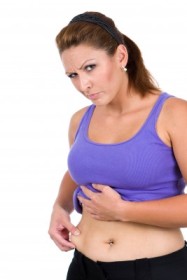
Early changes to dieting and exercise are especially crucial. One of the chronic manifestations connected with menopause is weight gain, specifically across the middle. Analysis shows that abdominal fat (since it is occasionally unflatteringly described) is one of the more usual menopausal symptoms and directly connected to reduced oestrogen levels and hormone discrepancy.
Early changes of diet and exercise can help to abate extra weight around the waist in post menopausal women. This is important for numerous medical reasons. Women who gain weight over the hips are put at higher risk of developing cardiovascular disease and certain types of cancer. Pre menopausal women typically have a problem with excess weight within the hips, thighs, and buttocks. However, following menopause weight gain often shifts towards the waist. Yet again, this shift is precisely attributed to decreased oestrogen levels as well as hormonal fluctuations.
Sustaining the identical waist measurements as ahead of the start of menopause is difficult if one is unlucky enough to come up with another typical menopausal symptom – menopausal food and/or beverage cravings.
Menopausal diet and beverage cravings are specifically subtle as they often bypass someone’s very own natural tendency to control or steer clear of individual food or beverage favorites. Menopause food and drink cravings are proportional to hormone changes and decreased oestrogen levels. Women suffering from these kinds of cravings may sense as if they have little or no command over these bad satisfaction indulgences. If a more than 5% excess weight may be attributed to menopausal food cravings remedial actions should be thought about.
Hot flashes and night sweats are most likely the most typical menopausal symptoms. Hot flashes and night sweats can vary in bout span and intensity dependant upon the specific woman. Unless intervening action is taken, hot flashes and night sweats may raise (following the onslaught of menopause) since oestrogen levels carry on and reduce.
Menopausal flashes as well as sweating may be partially negated with the application of ideal light-weight clothes and bedding. Layers are better than individual heavy layers. Wicking wear has come a long way during the past years as new non-absorbent fabrics are getting to be available to manufacturers.
Hot flashes and sweating are definitely the most instantly bothersome of menopausal symptoms. Hot flashes have been described as a warm to hot internal burning sensation that creates rapidly to intensity within the face, neck, as well as upper chest area. Individual bouts can last for upward to twenty minutes and may be displayed as frequently as every one to two hours.
Night sweats could be much more devastating long-term as they could badly influence sleep patterns. Women going through moderate to serious night sweats find it very hard to have a full, good night’s sleep. A minimum of 6 to 8 hours of sound REM sleep is essential to obtain a great night’s sleep. Awakening every hour to two hours along with night sweat bouts is not conducive to this particular process. Hot flashes as well as sweating have been directly associated with hormone discrepancy as well as reduced estrogen levels.
Other usual menopause symptoms consist of infrequent periods,loss of or decreased libido, vaginal dryness, fatigue, hair loss (or gain), sleep problems, difficulty concentrating, memory loss or lapses, dizziness, incontinence, bloating, elevated allergy problems, brittle or very easily broken fingernails, changes in body odor, racing heart beat, depression, anxiety, irritability, anxiety attacks, breast pain, migraines, aching joints, burning feeling inside mouth or tongue or bad taste in the mouth, electric shocks, digestive irregularities, gum problems, bleeding gums, muscle tensions, itchy skin, and tingling extremities.